 Gandor
Where Automation
Meets Skilled Hands
Modern construction increasingly pairs automated equipment with the technicians who set it up, run it and check its work. Gandor trains and deploys crews specifically for this hybrid model — machine speed, human precision, on every rotation.
Construction is automating faster than ever
Jobsite robotics moved from pilot projects to everyday use in a single year. Contractors report adoption jumping sharply as the labor shortage and equipment maturity finally line up.
Contractor robotics adoption, 2025 → 2026
Source: BuiltWorlds 2026 contractor survey, reported via Contractor Magazine and Building Design + Construction.
Six ways machines and crews already work together
Gandor doesn't build the equipment — we supply and train the technicians who run it, position it, maintain it and catch what it can't. Here's what that looks like on site today.
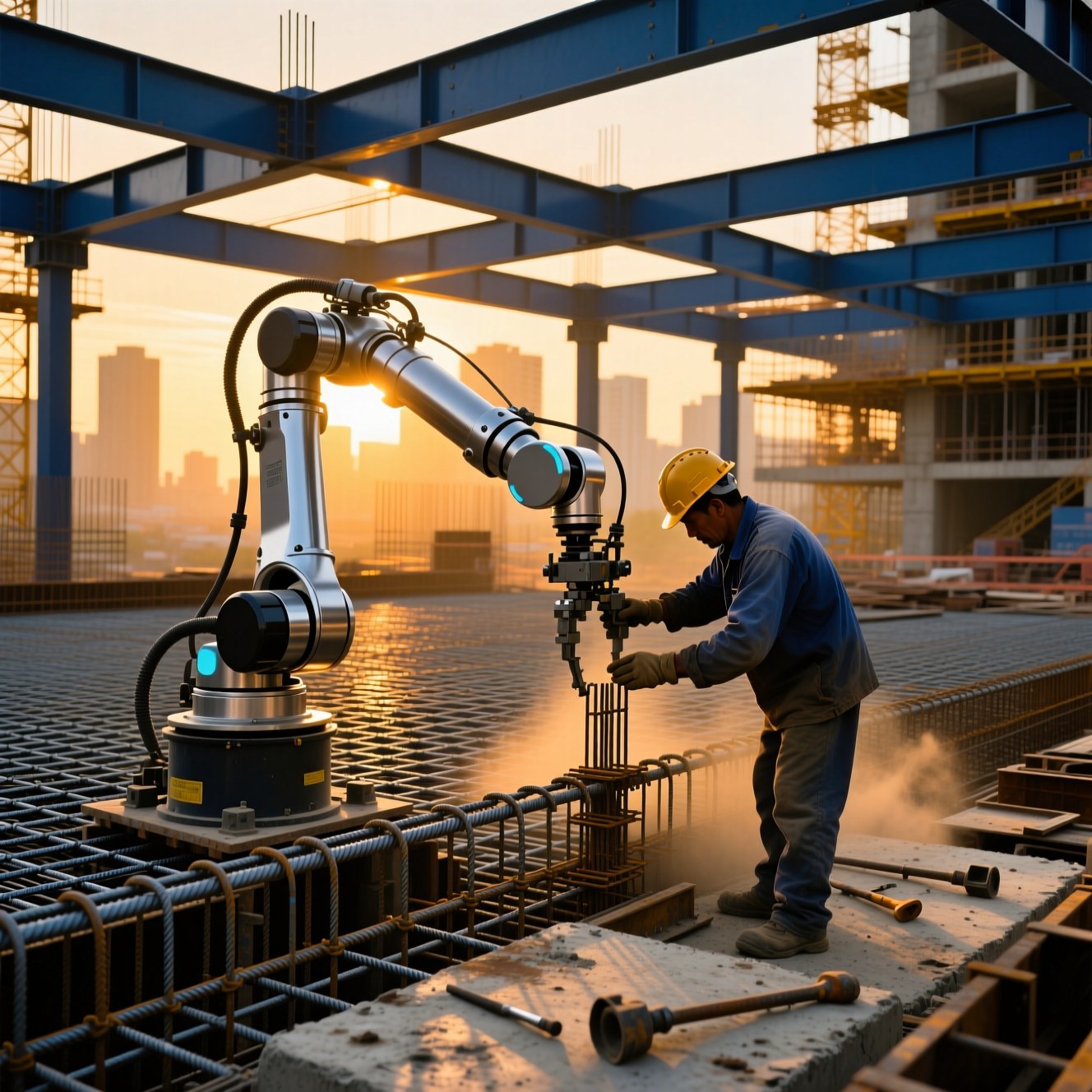
Rebar-tying robots + reinforcement crew
Automated tying robots fasten intersections at high speed. Gandor technicians handle layout, positioning and quality checks.
Source: Advanced Construction Robotics (TyBot/IronBOT)
Mesh-laying machines + placement crew
Placement machines move and position heavy rebar mats. Workers guide alignment, secure edge details and verify cover depth.
Laser-screed machines + finishing crew
Robotic screeds level large concrete pours to tight tolerance. Finishing crews handle edges, joints and surface texture.
Bricklaying robots + masonry crew
Semi-automated layers handle repetitive wall runs. Skilled masons finish corners, openings and custom detail work.
Source: Construction Robotics (SAM100) customer data
Autonomous transport + logistics crew
On-site carriers move materials between staging and pour zones. Gandor's crew manages loading, routing and site safety.
Robotic total stations + survey crew
Self-tracking total stations stake out points without a second person on the rod. Surveyors verify control, resolve conflicts and sign off on layout.
The loop that keeps machine output accountable
A hybrid crew isn't just a worker standing next to a machine — it's a closed loop, and Gandor's own digital tools verify both ends of it.
Machine executes
The equipment handles the repetitive, high-precision task at speed.
Crew sets up & monitors
Technicians position, calibrate and watch for exceptions the machine can't judge.
WearGrid + VizionGrid verify
Wearable data confirms the crew's safety and hours; aerial monitoring confirms the work.
Supervisor signs off
One dashboard shows machine output, crew status and quality — before the next pour.
What a hybrid crew buys you
Speed
Repetitive tasks run at machine pace instead of manual pace, without losing oversight.
Quality
Consistent machine output, checked and finished by people trained to catch what it misses.
Safety
Fewer repetitive-strain tasks for people, monitored in real time through WearGrid.
Predictability
Machine throughput plus verified crew hours make schedules easier to commit to.
Scalability
Adding equipment scales output faster than adding headcount alone.
Documentation
Every pairing leaves a digital record — who operated what, and what VizionGrid confirmed.
A worldwide shift, not a niche trial
The push toward hybrid crews is happening across the industry, not inside one company. It's worth understanding why before deciding whether to adopt it.
What's driving it
Aging workforces in North America and Europe, combined with a structural shortage of skilled trades, make automation the most immediate lever available to contractors — not a long-term bet, but a response to today's labor gap.
Equipment that was pilot-stage a few years ago — rebar-tying robots, semi-automated masonry, laser-guided screeds — is now bought and operated on ordinary commercial jobs.
Where Gandor fits
Gandor's UAE track record already proves the core skill this model needs: getting trained technicians onto a site fast, under a rotational contract, with full legal compliance and digital oversight.
Hybrid crews extend that same deployment model to sites that are automating — the workers just also know how to run, calibrate and maintain the equipment next to them.